


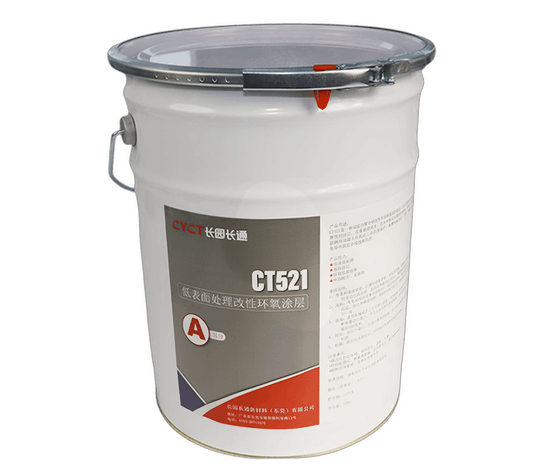
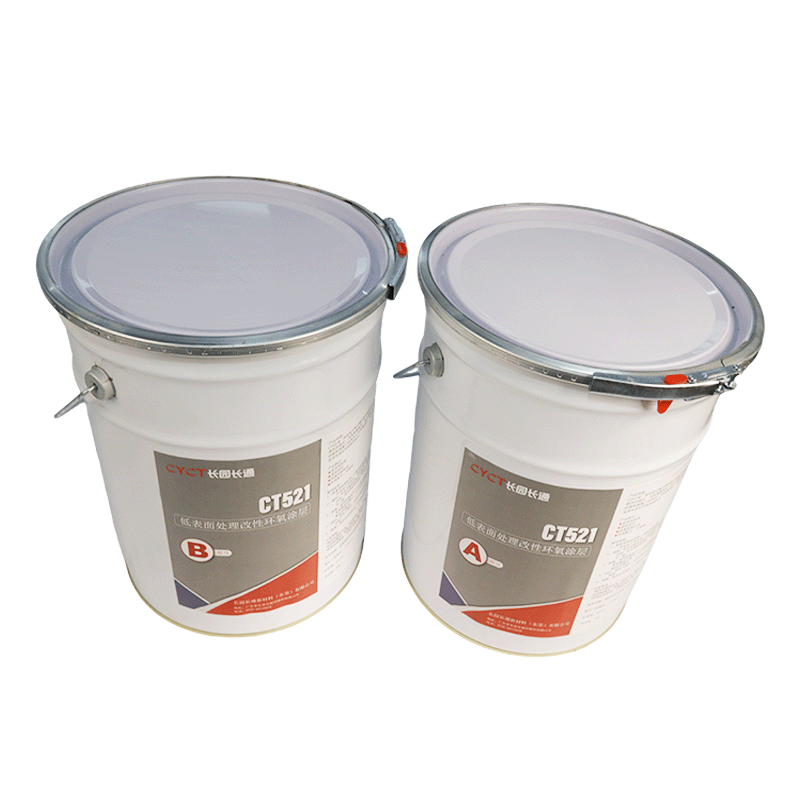
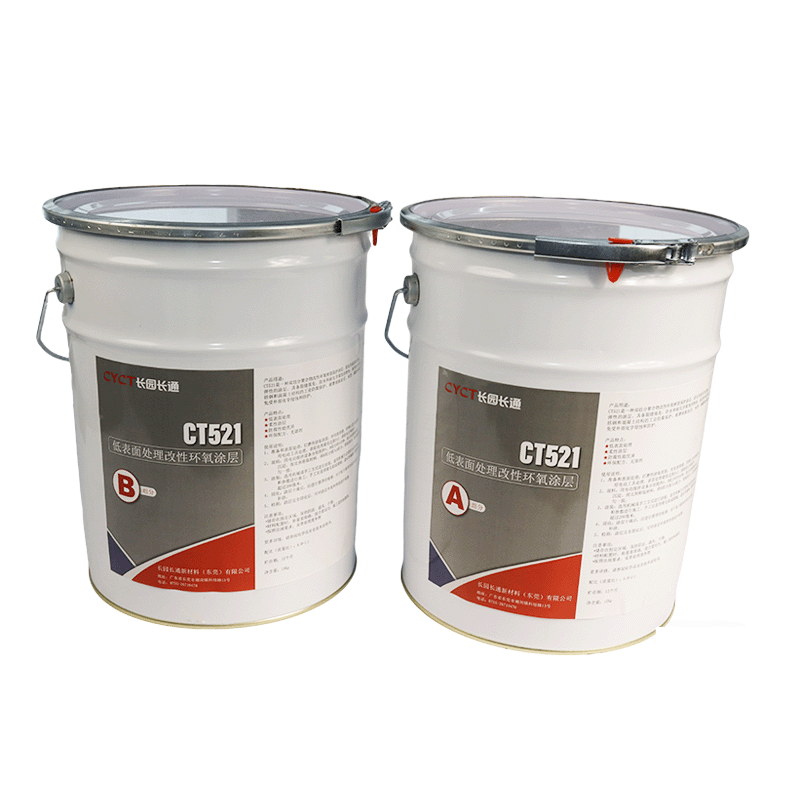
CT521 Modified Epoxy Coating for Minimal Surface Preparation
Performance Indicators
| Glass Transition Temperature Tg, DSC (℃) | Shore Hardness | Abrasion Resistance | Weight Mixing Ratio(A:B) |
Pot Life (200g,25℃,min) |
|---|---|---|---|---|
| 48 | 72 | Excellent | 1:1 | 40 |
| Bending Test(mm) | Impact Test(cm) | Adhesion(MPa) |
Shear Strength
(MPa)
|
Maximum Service Temperature(℃) |
| 2 | 50 | 9 | 13 | 70 |
Application Method
Surface Preparation
Proper surface preparation is critical to the long-term performance of this product. Exact requirements vary depending on service severity, design service life and the initial condition of the substrate.
1. Remove dirt, oil, grease and other contaminants using a high-pressure water cleaning system with suitable cleaners/degreasers.
2. All skip welds, weld spatter, projection welds and other rough surfaces shall be ground smooth; notches and pinholes shall also be ground and filled. All protrusions, edges, high spots and weld fillets shall be ground to a 3 mm radius, and all corners shall be radiused to maximize coating performance.
3. Blast all surfaces to be coated using sharp angular abrasives to achieve a surface profile of 75 to 100 micrometers and a near-white metal cleanliness standard (SIS SA 2½ / SSPC-SP 10). For immersion service, a white metal blast standard (SIS SA 3 / SSPC-SP 5) is required.
4. After blasting, clean the metal surface with a solvent-based residue-free cleaner to prevent oxidation or contamination.
5. Metals exposed to salt solutions (e.g. seawater) shall be blast-cleaned and high-pressure water jetted, then left for 24 hours to allow soluble salts within the metal to leach to the surface. Conduct chloride contamination testing. Repeat the procedure until surface chloride levels are below 50 mg/m² (50 µg/cm²). Subsequently blast and clean the surface in accordance with Points 3 and 4 above.
Mixing
1. Stir Component A (Resin) and Component B (Curing Agent) separately for one minute using a low-speed electric drill fitted with a mixing paddle. Add Component B to Component A and mix thoroughly for 3–4 minutes until a homogeneous consistency is achieved.
2. Apply immediately after mixing and complete all work within the specified pot life.
Application
1. Dry film thickness per coat: 200 to 250 micrometers (8 to 10 mils). A minimum of two coats is recommended to eliminate pinholes. Two coats of contrasting colours may be used as a wear indicator for overcoating inspections.
2. If the target total thickness cannot be achieved in a single application, multiple coats may be applied within the specified overcoating window. If the window is exceeded, light blasting followed by solvent cleaning to remove blast residues is mandatory before re-coating.
3. Ambient and substrate temperature range: 15 to 40 °C (59 to 104 °F)
4. Relative humidity: <85 %; the substrate temperature shall be a minimum of 3 °C above the dew point at all times.
Precautions
1、This product is not suitable for use in pure oxygen or oxygen-enriched environments, and shall not be used as a sealing material for chlorine or other strong oxidizing substances.
2、For information on safe handling of this product, please refer to the Material Safety Data Sheet (MSDS).
3、Store at room temperature in a cool and dry place.
Shelf Life
12 months
 Name:
Name: Phone:
 Email:
 Product Options:
 Remark: